- By TACH Systems Team
- 20 Oct 2026
- 4 minutes
Share on
ECUs, HMIs, sensors, wiring harnesses and connectivity: how a System Integration approach can help OEMs develop smarter, more reliable mobile machines that are ready to evolve.
The mobile and off-highway machinery sector is undergoing a technological transformation that affects the entire onboard electronic architecture. From earthmoving equipment to agricultural vehicles, lifting equipment and special-purpose vehicles, manufacturers need to integrate increasingly advanced control functions while ensuring reliability, safety and operational continuity, even in the most demanding environments.
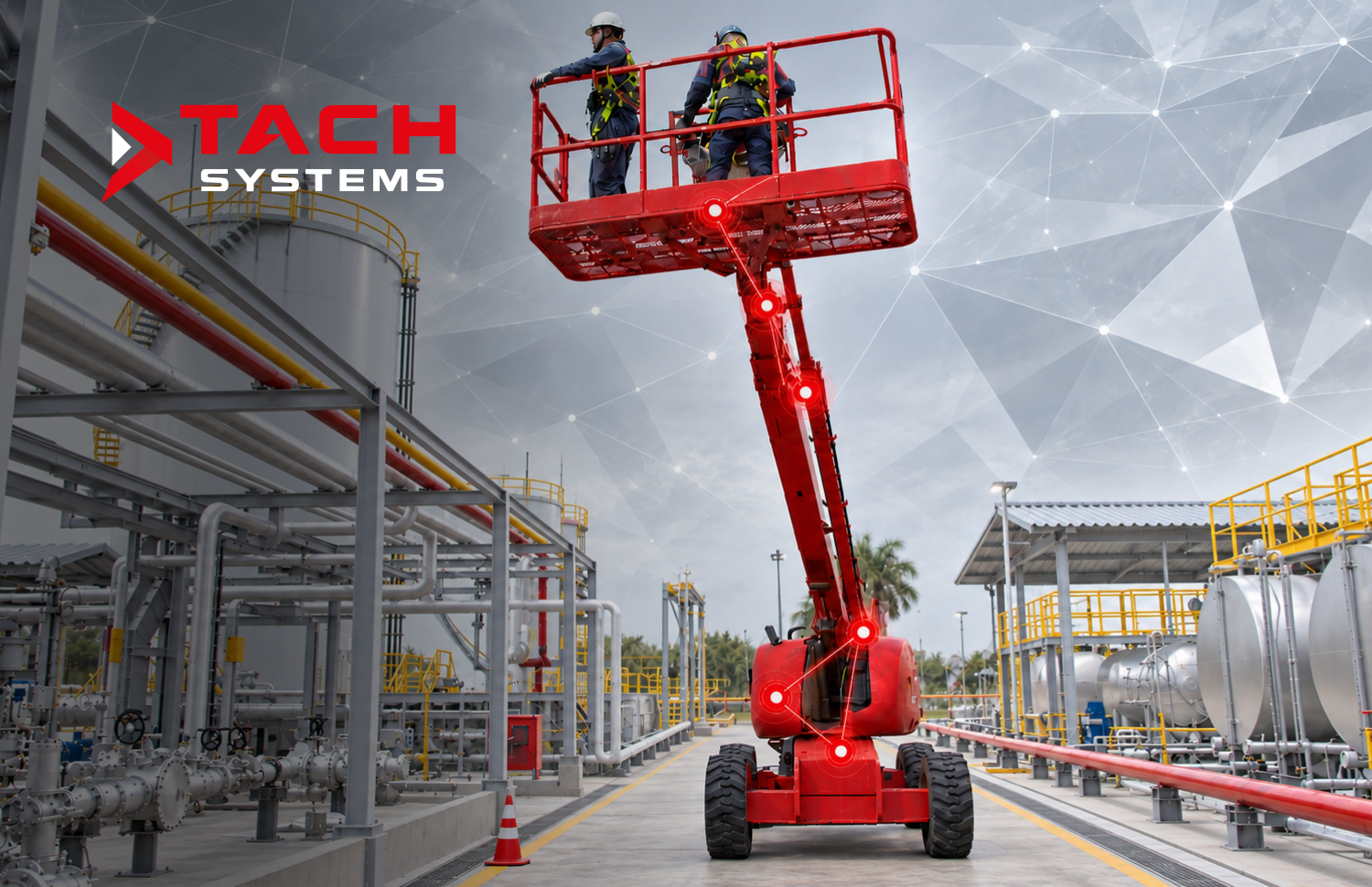 The challenge for OEMs is no longer simply selecting individual electronic components, but making them work together within a coherent, secure and scalable system.
This is where TACH Systems operates as a System Integrator, bringing together the expertise of ALMEC, TSM Sensors, HTP Connectivity and Diaboard to develop architectures designed around the specific requirements of each machine.
From a single ECU to the machine’s complete electronic architecture
When electronic systems are developed separately, integration can become complex, requiring additional coordination, compatibility checks and design adjustments.
Designing the electronic architecture as a single system makes it possible to address the interactions between hardware, software, communication and machine functions from the outset.
This approach helps define component interfaces, communication network structures and diagnostic requirements. For OEMs, it means simplifying integration and laying the groundwork for greater standardisation across models and product generations.
A technology ecosystem designed around the machine
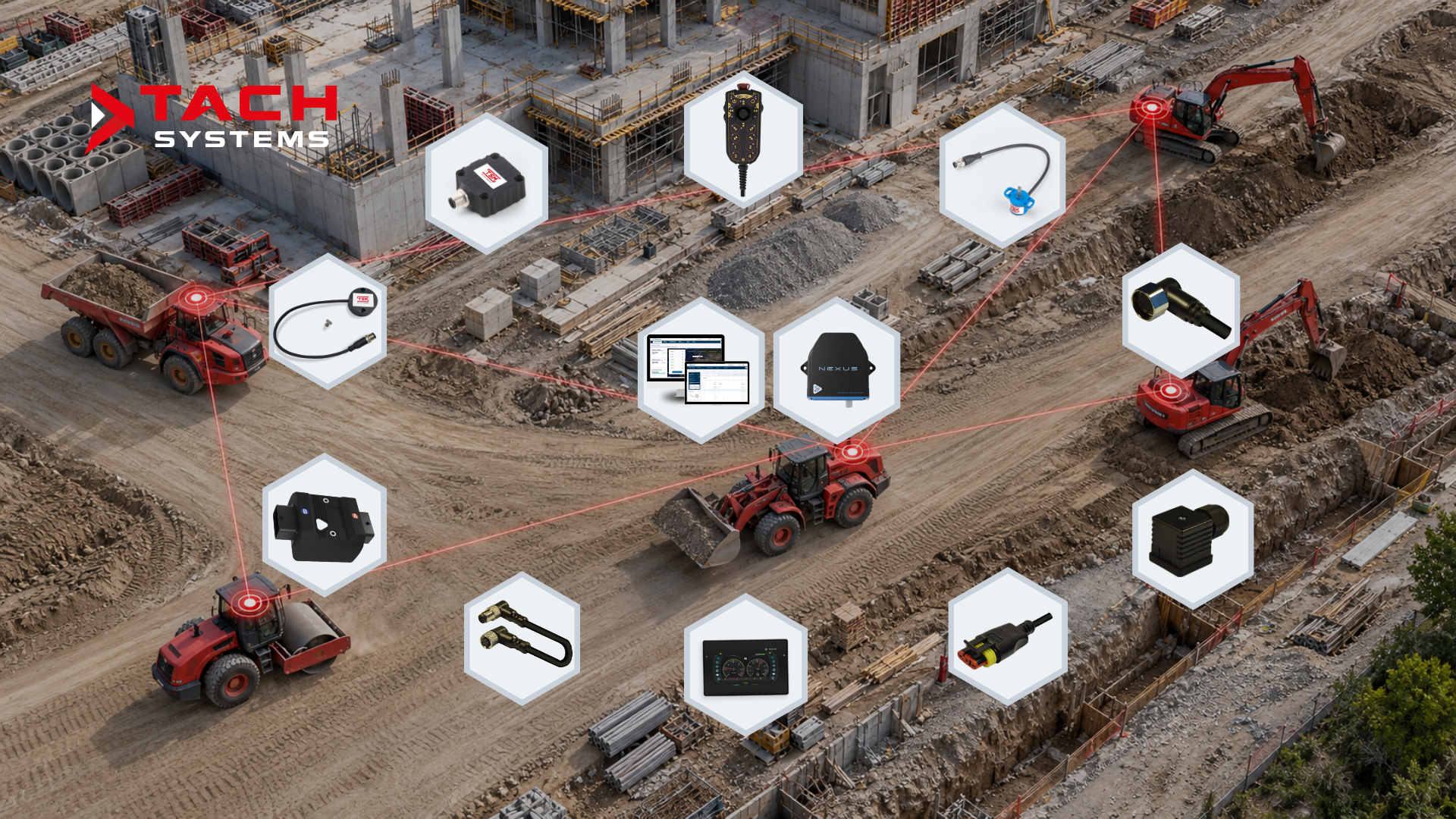
TACH Systems provides manufacturers with a single technical point of contact, integrating technologies that support specific functions within the architecture:
ECUs and electronic control: programmable control units for managing machine functions, motion control, CAN bus communication and the implementation of operating logic.
HMIs and operator interfaces: display and control systems for monitoring parameters, managing functions and making human-machine interaction more intuitive.
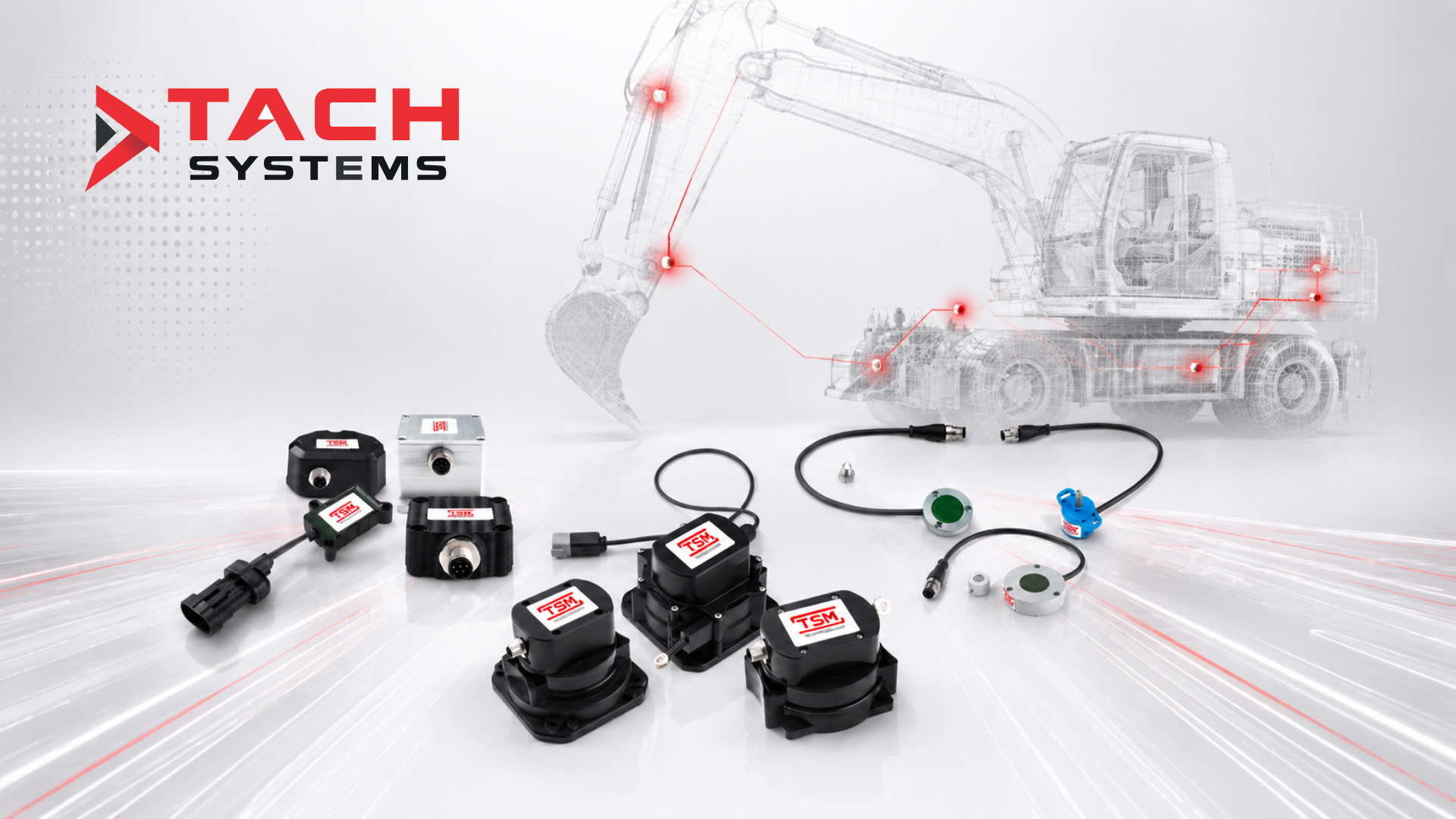
Industrial sensors: solutions for measuring position, inclination, rotation and displacement, designed for industrial applications and harsh environments.
Wiring harnesses and connections: connectors, splitters and interconnection solutions for reliable power and signal distribution throughout the machine.
Connectivity and telemetry: IoT gateways and a digital platform for collecting operating data, supporting remote diagnostics, monitoring fleets and developing connected services.
Reliability, safety and communication in the most demanding environments
Mobile machines often operate in conditions involving vibration, shock, dust, moisture, temperature fluctuations and intensive duty cycles.
In these environments, the reliability of onboard electronics depends on both device characteristics and the quality of the overall design. Proper CAN network management, the selection of sensors and connectors suited to the operating environment, the definition of control logic and the protection of communications are all essential considerations.
Alongside these requirements, functional safety and cybersecurity are receiving increasing attention and need to be considered from the initial architecture design stage.
An integrated approach helps identify safety-related functions, select appropriate technologies and plan the documentation and verification activities needed for the applicable conformity assessment processes.
The aim is to develop reliable, verifiable architectures that support the validation and certification processes required by the specific application.
One architecture, multiple off-highway applications
Requirements vary depending on the machine and its duty cycle.
Construction and road building
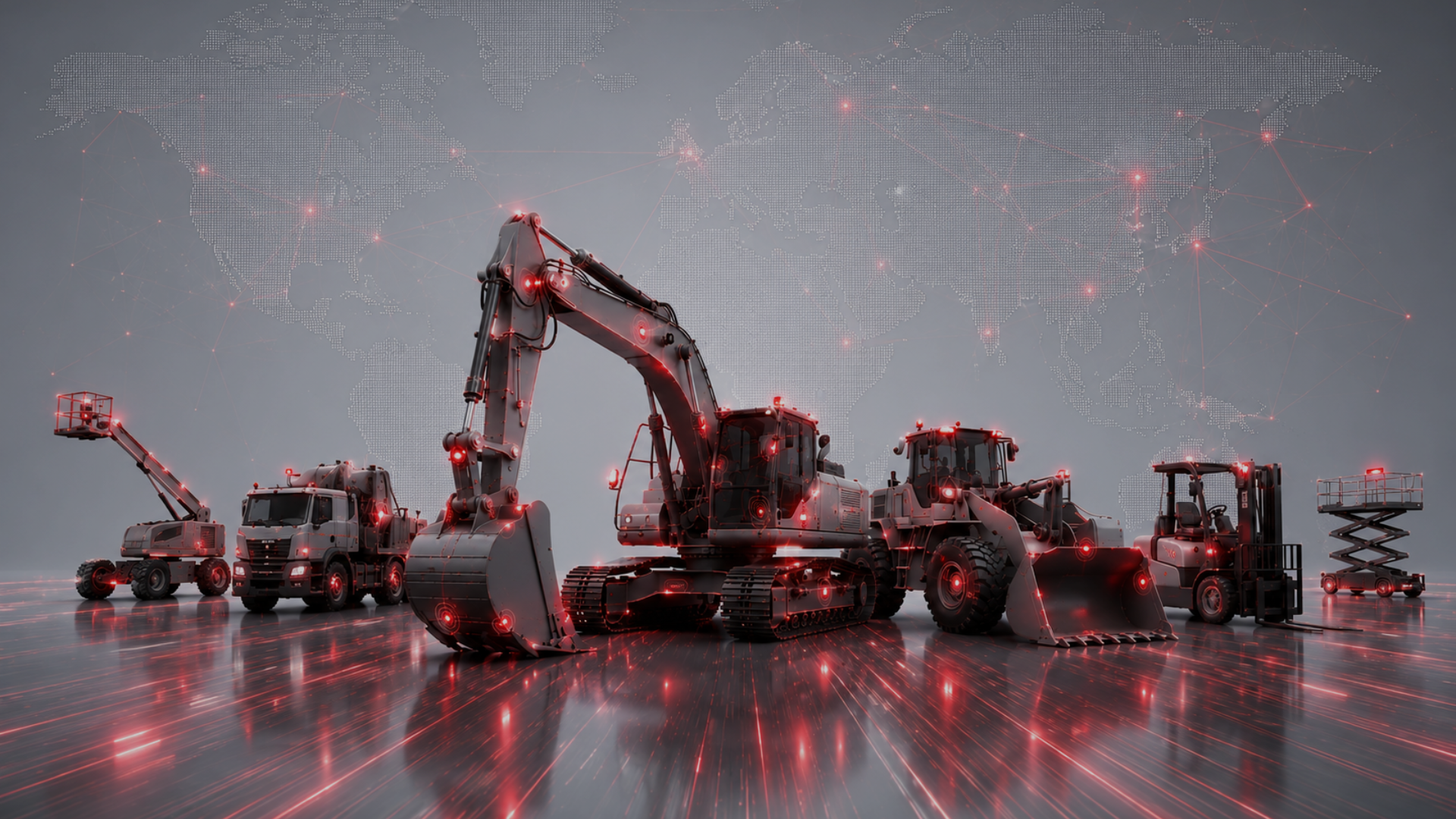
Excavators, wheel loaders, compaction rollers and paving equipment require electronic systems capable of managing operating functions, movements, working parameters and diagnostics, even under high levels of mechanical stress.
Agriculture and agricultural machinery
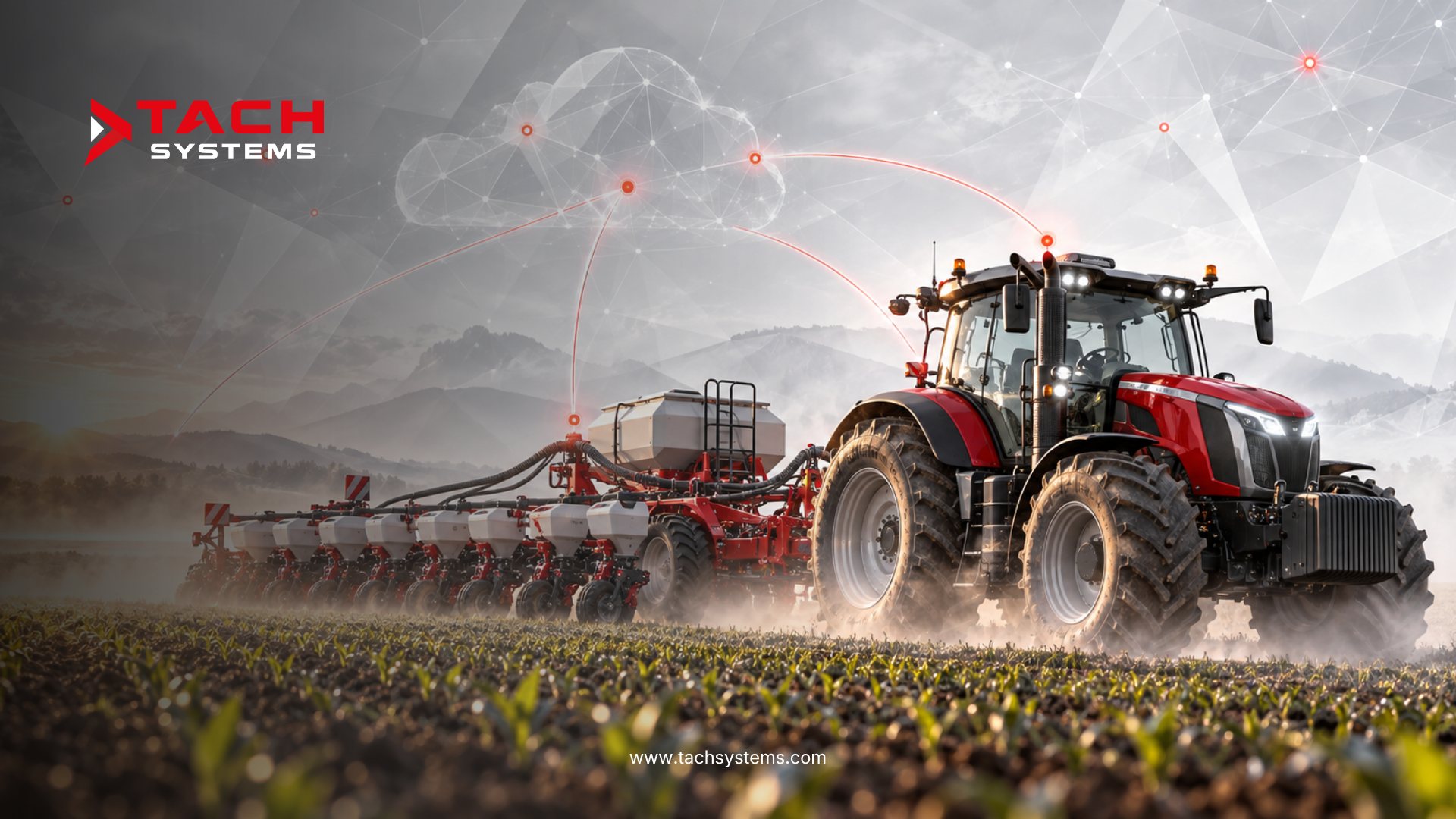
Tractors, seed drills, sprayers and automated implements require electronic architectures that integrate function control, sensors, operator interfaces, onboard communication and connectivity for monitoring operations.
Lifting and material handling
Aerial work platforms, cranes, telehandlers and forklifts need coordinated control systems, precise measurements and management of the safety functions specified in the design.
Municipal and special-purpose vehicles
Refuse compactors, road sweepers, sewer cleaning trucks and hooklift systems use onboard electronics to coordinate operating sequences, movements, controls and diagnostic information. Connectivity can also support fleet monitoring and maintenance.
Forestry, mining and emergency vehicles
Forestry machines, mining equipment and emergency vehicles operate in conditions that require particular attention to component ruggedness, communication reliability and the availability of operating functions.
From design to the connected machine: a system ready to evolve
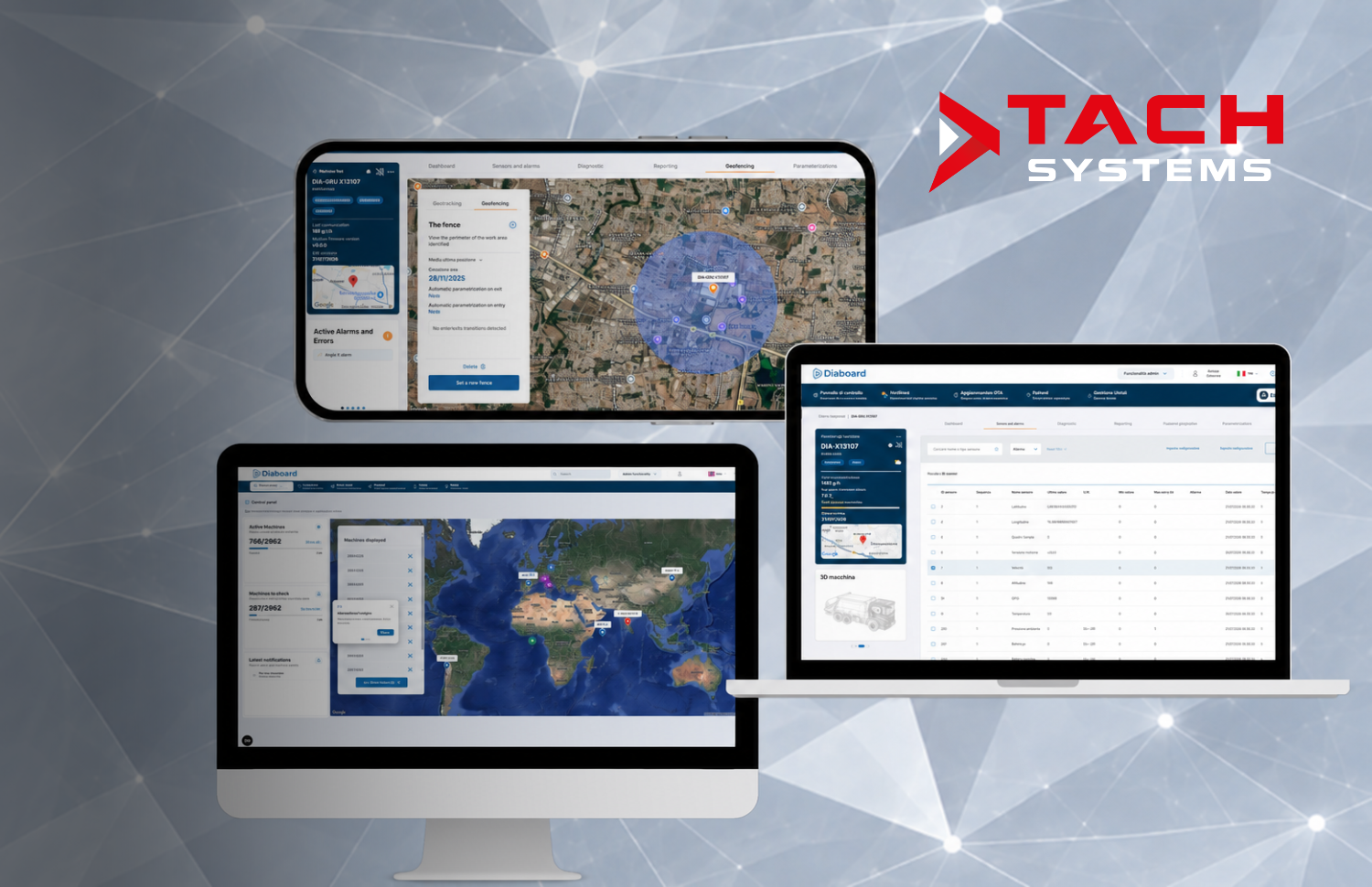
Another growing requirement for OEMs is the ability to update and expand their machines’ functionality over time.
A well-designed electronic platform can make it easier to introduce new software functions, integrate additional sensors, enhance operator interfaces and activate digital services.
Through integration with Diaboard, the data available on the machine can be used to develop remote monitoring, diagnostics, preventive maintenance and fleet management services.
For manufacturers, this means considering the machine’s lifecycle, after-sales support and the opportunities offered by digital services from the outset.
From idea to prototype: developing the next generation of machines together
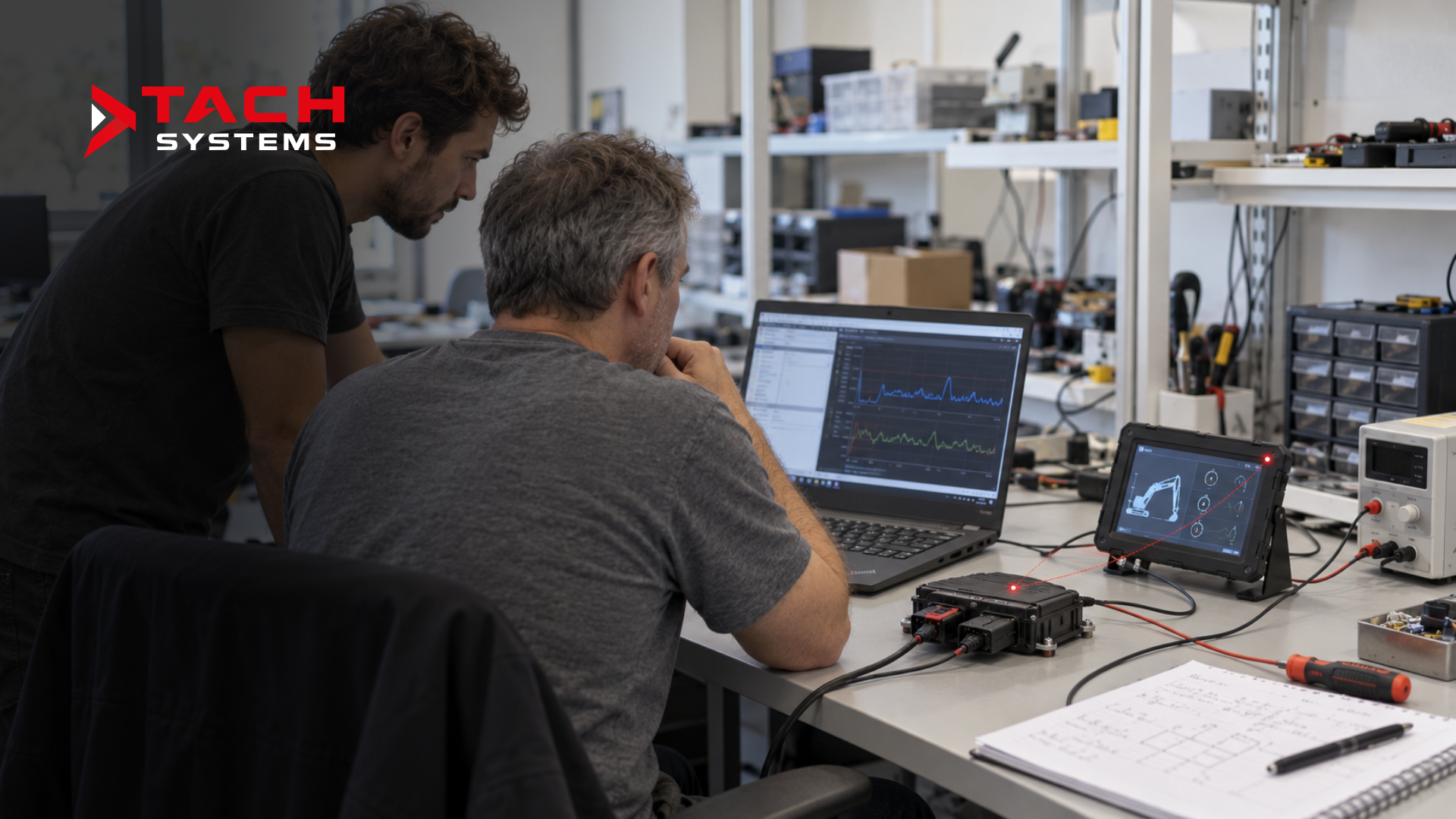 Every project starts with specific requirements: a new machine, the evolution of an existing platform, the integration of advanced functions or the redesign of an electronic architecture.
TACH Systems offers a technical collaboration process that can begin with a workshop focused on the architecture of the next generation of machines. This provides an opportunity to work with the manufacturer to analyse the required functions, application constraints, safety requirements, communication networks and possibilities for future development.
This initial phase can lead to the definition of a hardware and software concept, identifying components, interfaces, control logic and the overall system structure.
The process can then continue with the development of a functional prototype to assess design choices, test integration between subsystems and prepare for subsequent development and validation stages.
The aim is to support OEMs from requirements definition through to a practical solution, reducing technical fragmentation and improving coordination between the disciplines involved.
Are you developing a new off-highway machine or redesigning its electronic architecture?
Let’s start with your application. Contact us at info@tachsystems.com to assess the control architecture together, define the hardware and software, and develop an initial functional prototype.