
- By TACH Systems Team
- 30 Sept 2026
- 4 minutes
Share on
Ahead of EIMA International 2026, TACH Systems explores the key changes shaping the agricultural sector: from precision farming and increasing automation to connectivity and data management. This evolution is changing not only how work is carried out in the field, but also how agricultural machinery is designed.
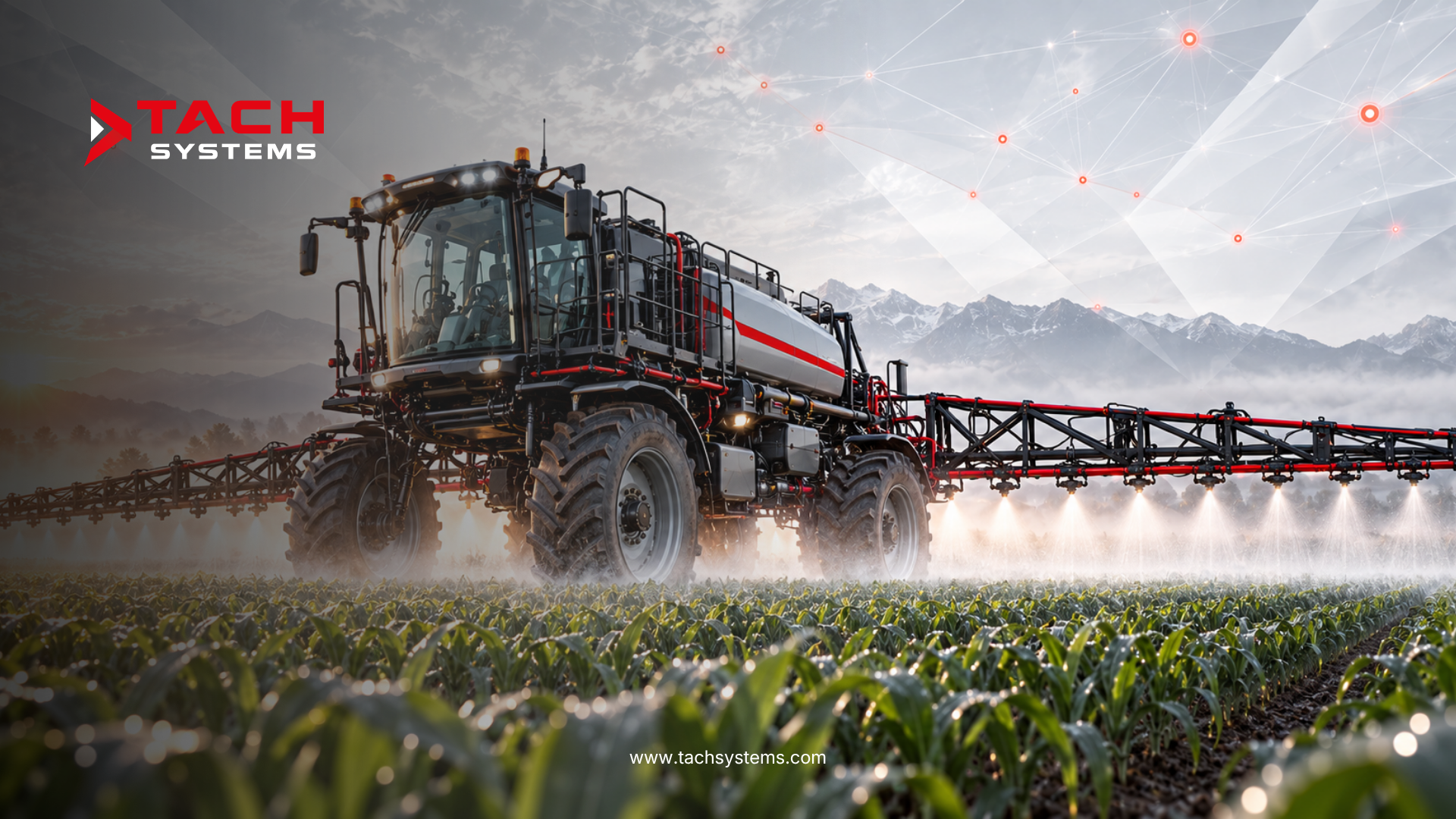 The agricultural sector is undergoing a profound transformation. Pressure on operating costs, the need to increase productivity, the availability of new digital technologies and a stronger focus on sustainability are driving farmers and machinery manufacturers towards an increasingly precise, data-driven approach to agriculture.
According to Corporate Finance Associates’ (CFA) “Agriculture Industry Report Fall 2025”, the global agricultural market is expected to reach approximately USD 4.7 trillion in 2025 and grow at a CAGR of 4% through 2030, reaching around USD 5.7 trillion. However, the most interesting aspect is the nature of this growth: particularly in mature markets, value is gradually shifting from increased volumes towards productivity, technology adoption and more differentiated, sustainable production.
From Mechanisation to Precision Agriculture
One of the clearest trends is the digitalisation of agriculture.
The report estimates the global digital agriculture market at approximately USD 23.7 billion in 2025, with projected annual growth of 10.2% through 2030. This is significantly faster than the growth of the agricultural market as a whole.
Drones, autonomous tractors, satellite imagery, automated irrigation systems, robotics, artificial intelligence and real-time data analytics are increasingly becoming part of agricultural operations.
Technology is therefore becoming a tool for more precise action: using resources where they are needed, monitoring operating conditions, reducing waste and making decisions based on data collected in the field.
The report also highlights how rising fertiliser and labour costs are encouraging the adoption of these technologies among medium-sized farms. At the same time, cloud applications are making capabilities previously reserved for larger operations more accessible, from field mapping and crop monitoring to diagnostics.
Agricultural Machinery Is Becoming Increasingly Electronic
This transformation also has a direct impact on machinery manufacturers.
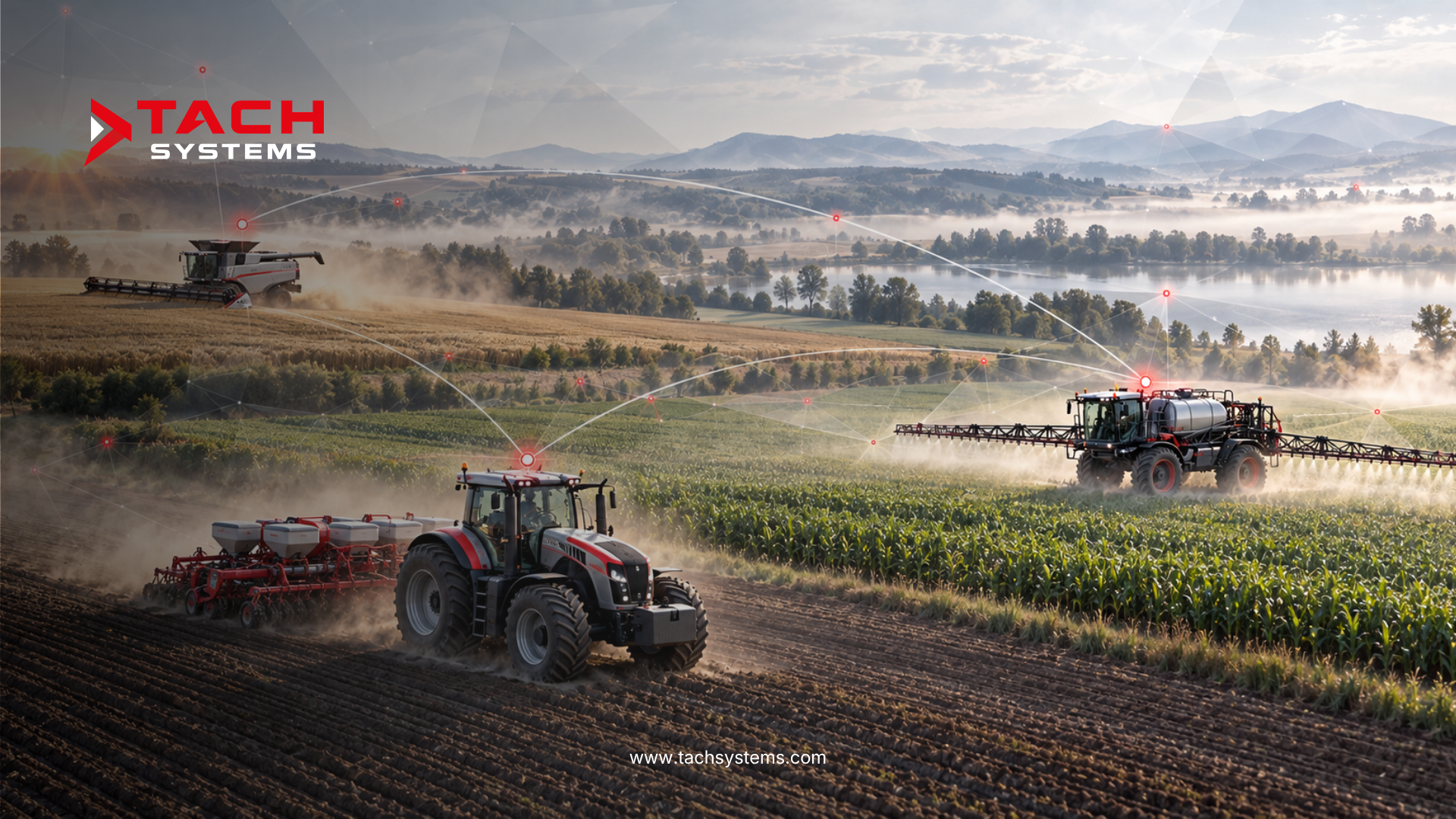
Tractors, seeders, sprayers, combine harvesters, forwarders and agricultural robots are no longer purely mechanical systems. They are becoming platforms in which electronic control, sensing, operator interfaces, communication and connectivity must work together within a single architecture.
ECUs and radio control systems manage machine functions; sensors and encoders capture position, inclination and other operating parameters; HMIs and operator controls enable operators to configure and monitor activities; CAN and ISOBUS networks allow data exchange between subsystems and implements.
Connectivity beyond the machine is gradually being added to these layers.
Data Becomes Part of the Machine
The growth of precision agriculture brings another element into focus: data.
Collecting information from ECUs, sensors and communication networks provides a deeper understanding of how a machine behaves during operation.
Connectivity, IoT gateways and cloud platforms then allow this information to extend beyond the machine, enabling applications such as remote monitoring, diagnostics, fleet management, performance analysis and over-the-air (OTA) software updates.
The report describes an increasingly data-driven agricultural ecosystem, where knowledge and precision are becoming as important as traditional factors such as land availability and weather conditions.
For manufacturers, this means connectivity should be considered part of the architecture and assessed from the design stage.
Efficiency and Sustainability Become Complementary Goals
Technological transformation is progressing alongside environmental change. According to the figures presented in the report, the sustainable agriculture market reached approximately USD 16.8 billion in 2025, with a stated annual growth rate of 11.2%.
Reduced tillage, more precise resource management, soil monitoring and traceability are becoming increasingly relevant. A machine that can determine its position, operating conditions and working parameters more accurately can support more controlled use of resources and energy.
Sustainability is therefore becoming increasingly linked to the ability to measure, control and optimise.
The Technological Response: Designing the Machine as a System
In this scenario, the relationship between machinery manufacturers and technology suppliers is also changing. Integrating controllers, HMIs, sensors, wiring harnesses, gateways and software separately can increase project complexity. As machines become more digital and connected, designing these different layers as parts of a single architecture becomes increasingly important.
This is where TACH Systems’ approach as a System Integrator comes into play.
Starting with the machine and its application requirements, TACH Systems works alongside the manufacturer through a co-design process, bringing complementary expertise together within a single architecture.
From ALMEC ECUs and control systems to TSM Sensors’ sensing technologies, HTP Connectivity’s connection and wiring solutions, and connected machine management through gateways and the Diaboard IoT platform, the aim is to coordinate the different technological layers around the machine’s real needs.
This means going beyond simply adding more electronic components. It involves defining how those components communicate, which data they need to generate and how that information can be used throughout the machine’s lifecycle.
EIMA International 2026: From Agricultural Machinery to Connected Machines
Against this backdrop, EIMA International 2026 provides TACH Systems with an opportunity to demonstrate how the trends transforming agriculture can translate into the architecture of next-generation machines.
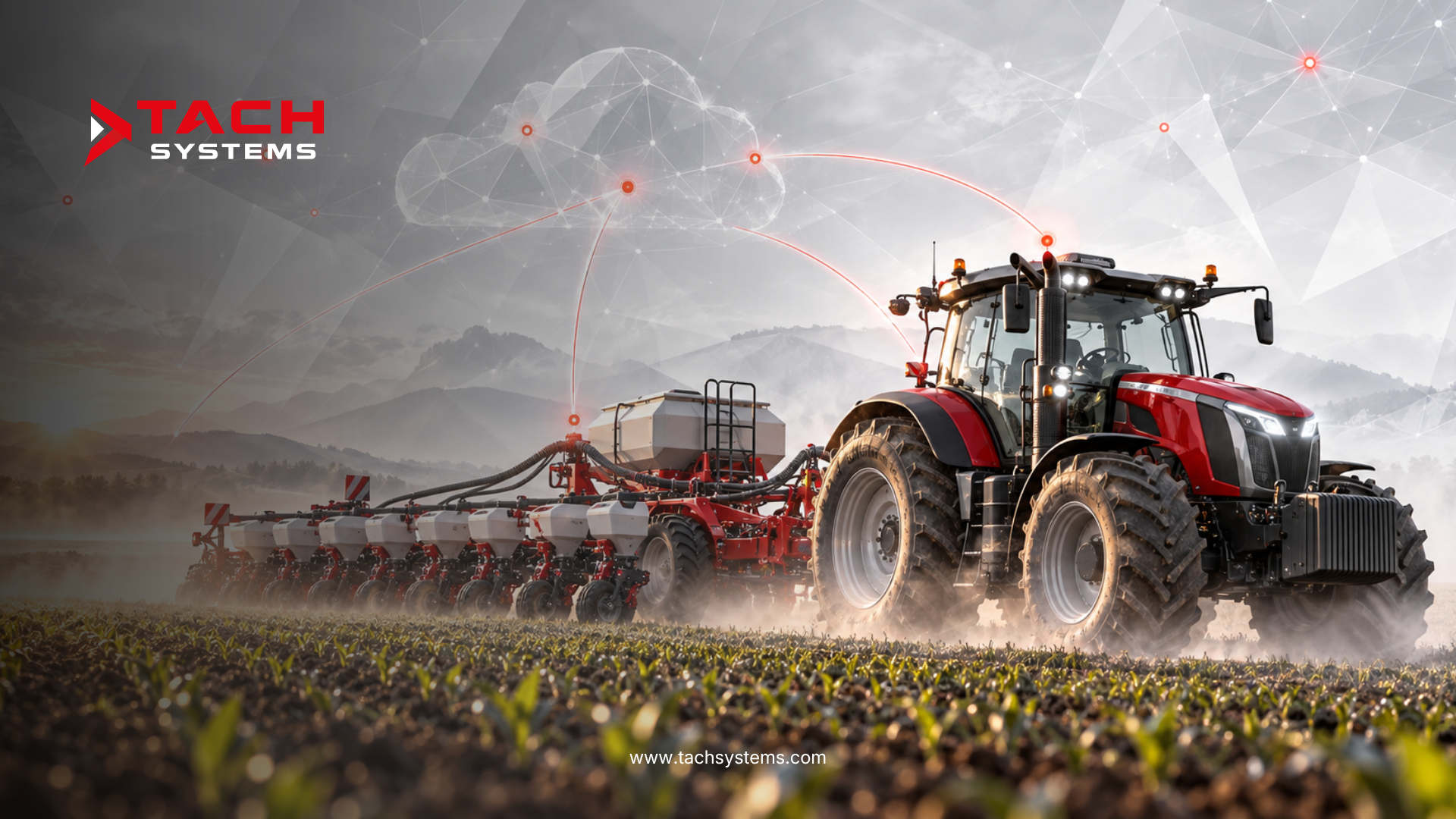
From precise seeder control to sprayer section management, from monitoring combine harvester functions to sensing technologies for agricultural robots, through to data collection and remote management, each application has different requirements.
The starting point, however, remains the same: the machine. Understanding its functions, operating conditions, available data and objectives makes it possible to build a coherent, scalable electronic architecture around it, ready for future development.
TACH Systems will be at EIMA International 2026, from 10 to 14 November in Bologna, Hall 15, Stand B15, presenting technologies and expertise dedicated to the electronic integration of agricultural machinery.
SOURCE: Agriculture Industry Report – Fall 2025