- By TACH Systems Team
- 27 Jul 2026
- 6 minutes
Share on
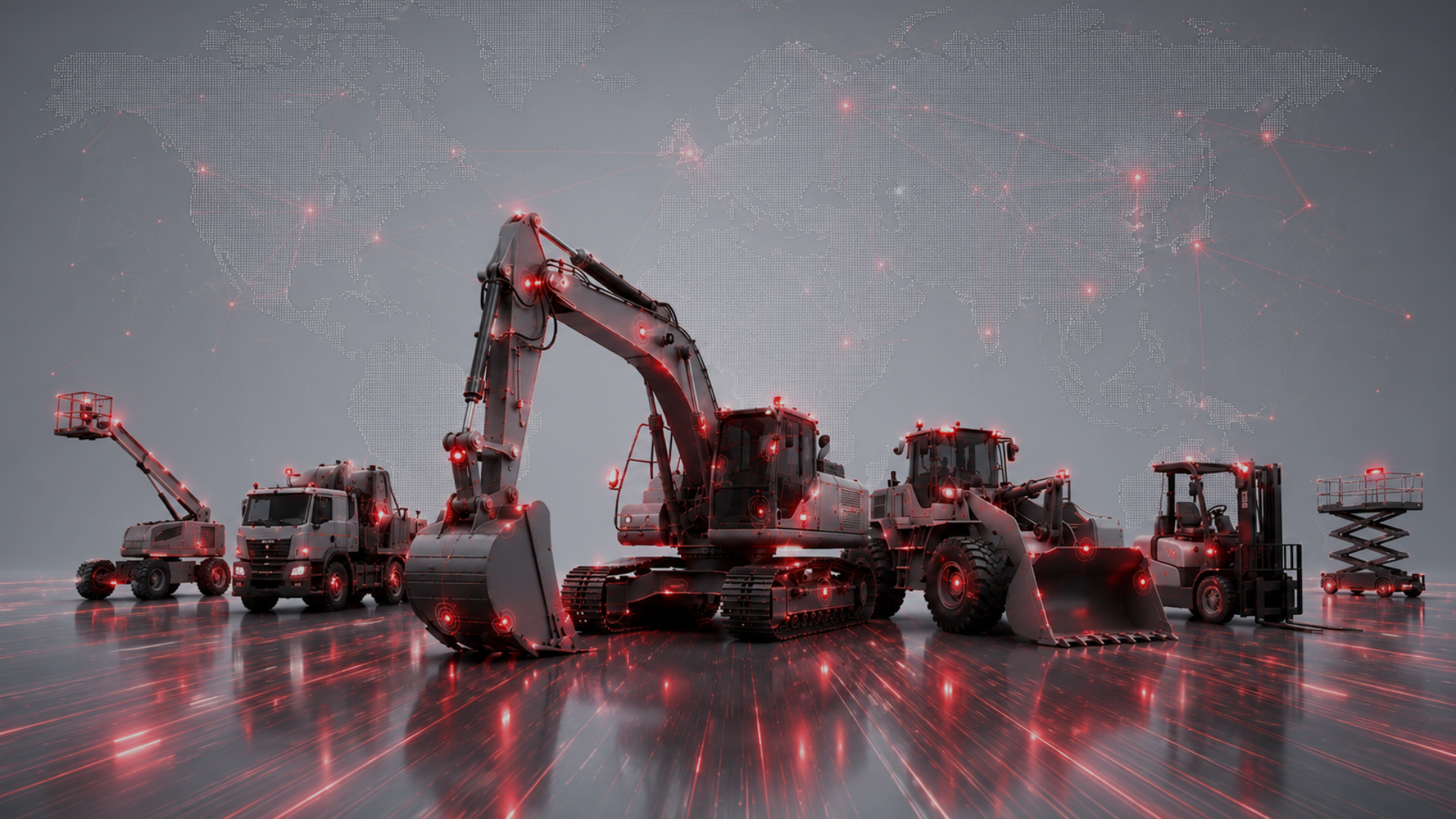
In the industrial mobility sector, digitalization means designing machines that can collect data, communicate with external systems, receive software updates, and integrate new services throughout their entire lifecycle.
This is why it is essential to distinguish between connected systems and connectable systems: two complementary concepts that have a significant impact on performance, operating costs, after-sales support, and the development of new digital services.
What Is a Connected System?
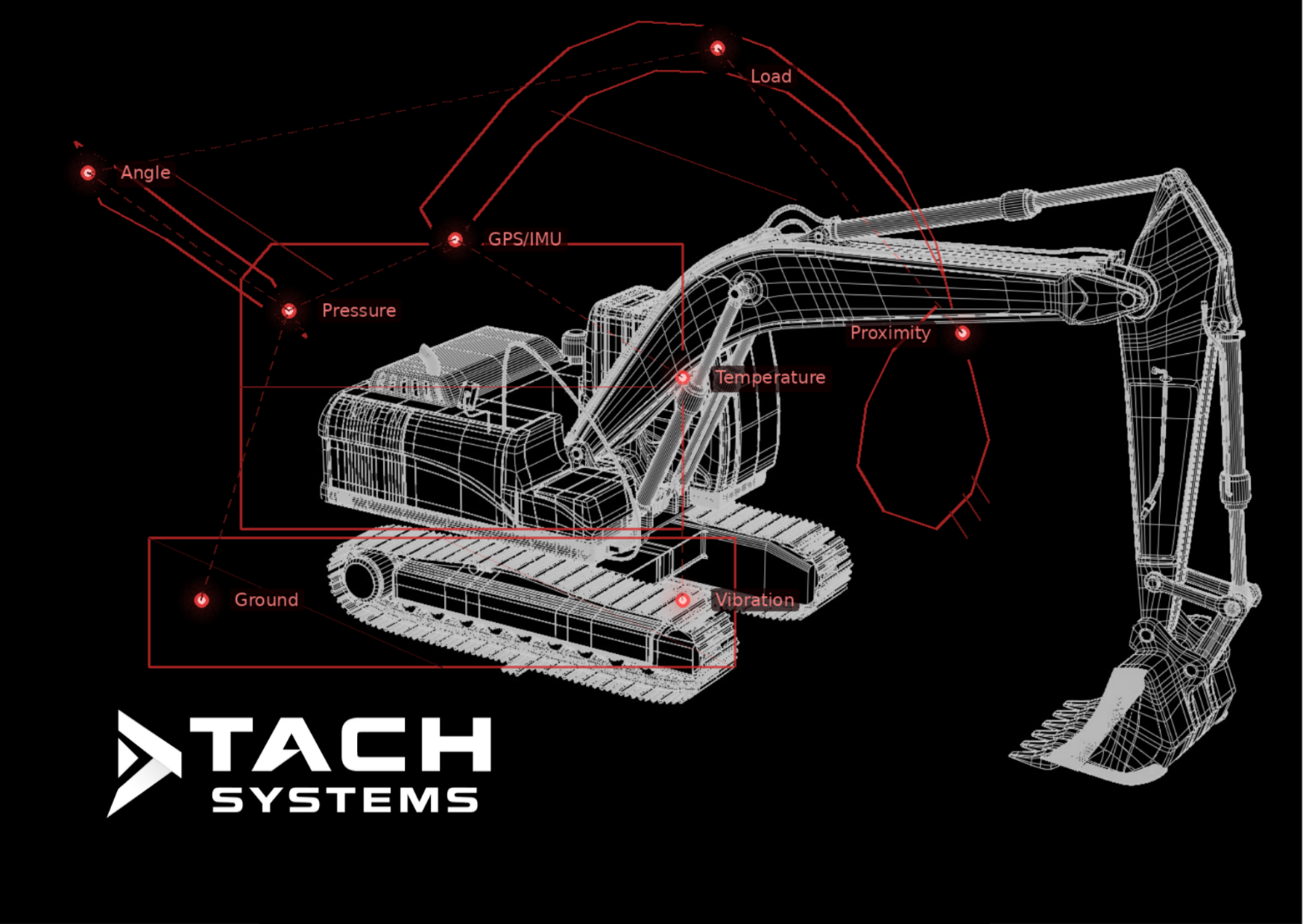
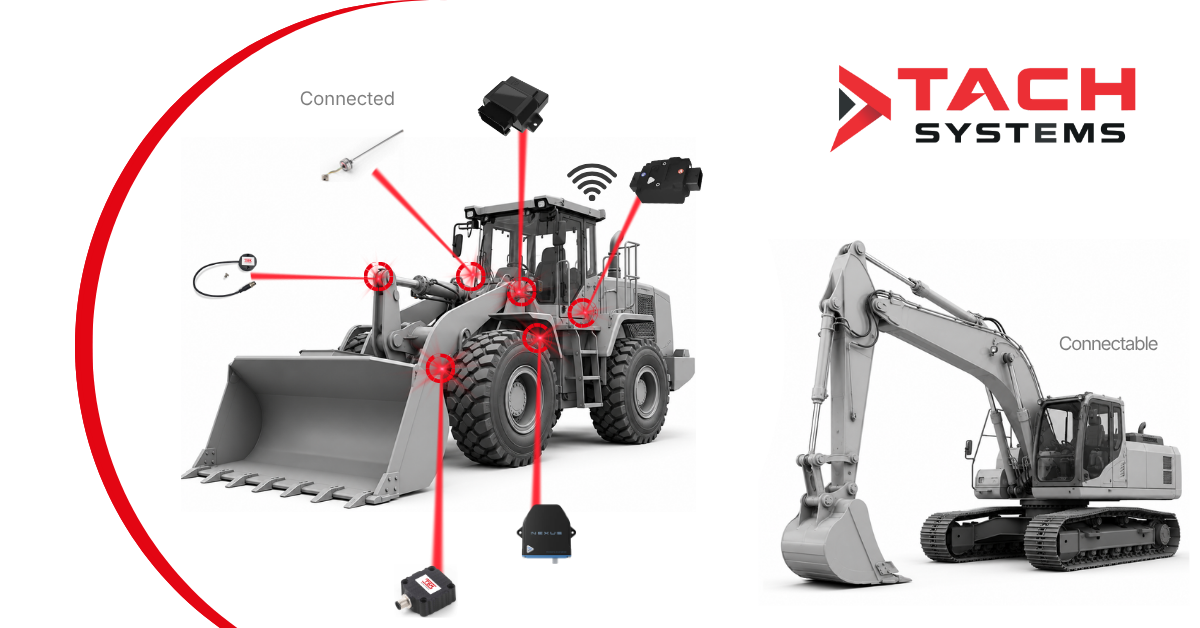
A connected system is a machine that communicates in real time with cloud platforms or enterprise systems through technologies such as IoT gateways, mobile networks, or Wi-Fi. It can transmit data related to:
location, routes, and machine usage;
operating status, working hours, and fuel or energy consumption;
ECU and sensor parameters;
faults, alarms, and maintenance requirements.
Connectivity transforms the machine into part of a digital ecosystem, enabling remote monitoring, diagnostics, and management to improve operational efficiency and maximize uptime.
An excavator, telehandler, forklift, agricultural machine, or waste collection vehicle thus becomes part of a digital ecosystem where data, operators, service technicians, and management systems can interact remotely.
What Is a Connectable System?
A connectable system is a machine designed from the outset to be connected, monitored, and updated over time, even if connectivity is not activated immediately. Thanks to a future-ready architecture, it can progressively integrate new digital services through:
interoperable ECUs and sensors;
CAN, CANopen, and J1939 communication protocols;
IoT gateways and APIs;
updatable firmware;
built-in authentication and cybersecurity features.
Connectability enables manufacturers to market machines today that are already prepared for tomorrow's digital services, avoiding the need to completely redesign the onboard electronic architecture.
Connectability in the Mobile and Off-Highway Industry
Connectability is applicable across all major industrial mobility sectors, including:
construction and earthmoving machinery;
agricultural machinery;
telehandlers and aerial work platforms;
forklifts and material handling equipment;
port reach stackers and RTG cranes;
waste compactors and municipal service vehicles;
drilling, mining, and extraction machinery;
special-purpose vehicles;
electric and hybrid vehicles;
rental fleets;
marine and offshore applications.
In these applications, remote monitoring, diagnostics, and software updates improve operational efficiency, maintenance planning, and equipment availability, delivering tangible benefits for OEMs, service organizations, rental companies, and end users.
The Benefits of Designing a Connectable Machine
A connectable machine provides a flexible, modular architecture capable of evolving over time and adapting to different applications and markets. It enables manufacturers to:
introduce new digital services;
update software and firmware remotely;
customize machine functionalities;
integrate with ERP, CRM, and enterprise platforms;
extend the machine's service life;
comply with new regulations and safety requirements.
As a result, the machine becomes an evolving technology platform, ready to grow alongside changing market demands.
Retrofit: Making Existing Machines Connectable
Digital transformation is not limited to newly manufactured machines. Through retrofit, existing equipment can also become connectable by integrating IoT gateways, sensors, and communication devices with the existing electronic architecture.
This approach allows mixed fleets to be digitized while enabling remote monitoring, diagnostics, and predictive maintenance, extending machine life without the need for replacement.
Digital Services Enabled by Diaboard
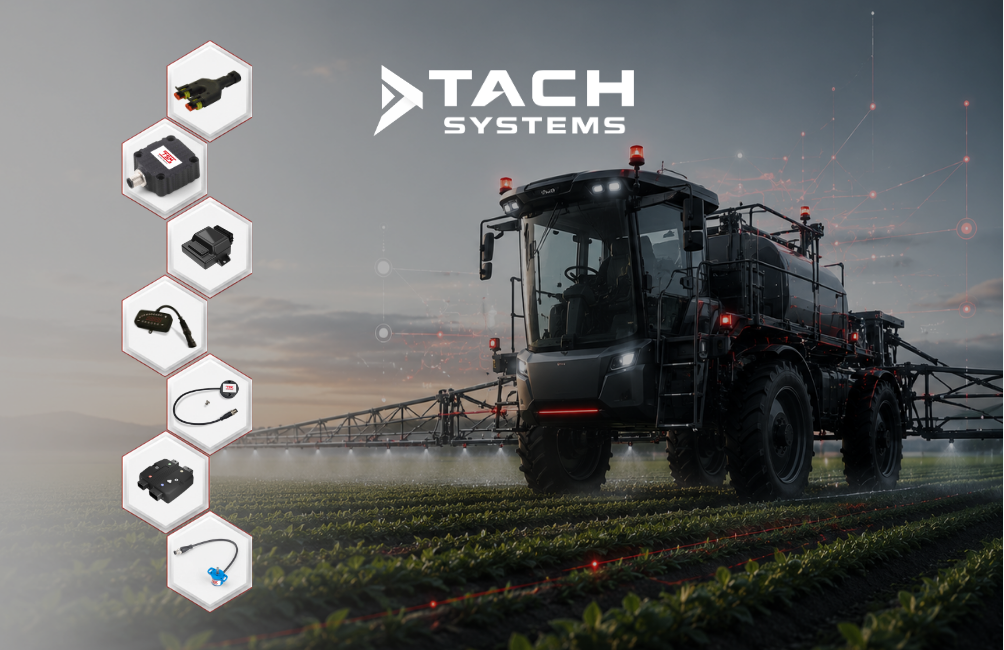
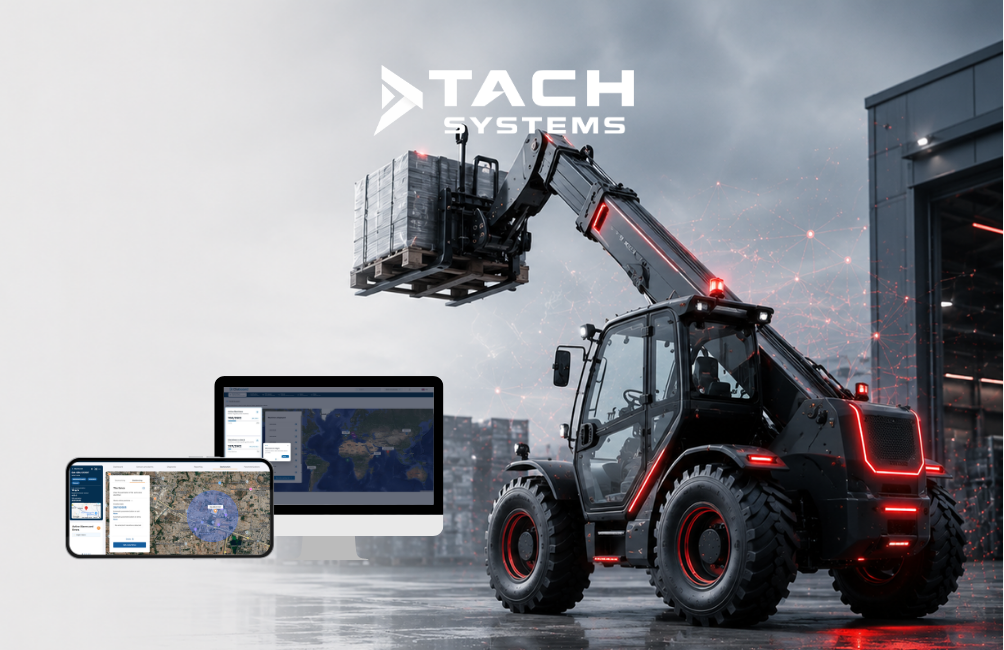
Within the TACH Systems ecosystem, Diaboard is the IoT platform that connects machines and industrial systems by collecting and organizing data from ECUs, CAN Bus networks, sensors, and IoT gateways for comprehensive remote management.
1. Fleet Monitoring and Management
Monitor machine location, operating status, working hours, utilization, and fuel or energy consumption to optimize fleet management.
2. Geolocation and Geofencing
Track machine locations and route history while receiving automatic notifications in the event of unauthorized movements or operation outside predefined geographical areas.
3. Remote Diagnostics
Analyze faults and diagnostic trouble codes remotely, reducing troubleshooting time, unnecessary service visits, and maintenance costs.
4. Scheduled and Predictive Maintenance
Plan maintenance activities based on actual machine usage with configurable alerts that help prevent unexpected downtime.
5. Over-the-Air (OTA) Updates
Deploy software and firmware updates remotely, ensuring machines remain up to date without requiring on-site intervention.
6. Reporting and Data Integration
Custom dashboards and reports transform operational data into actionable insights, while APIs enable seamless integration with ERP, CRM, and other enterprise systems.
7. Custom Solutions for Every Application Sector
From construction equipment and agricultural machinery to industrial vehicles, factory automation, special-purpose vehicles, and marine applications, Diaboard can be tailored to meet the specific requirements of every industry.
From Design to After-Sales: Support Throughout the Entire Lifecycle
The development of a connectable machine continues long after it enters service. TACH Systems supports OEMs throughout the entire product lifecycle, from engineering to after-sales service, providing:
integration of ECUs, sensors, HMIs, and IoT gateways;
system configuration, testing, and commissioning;
software and firmware updates;
technical diagnostics and customer support;
continuous evolution of digital services.
This approach ensures maximum operational continuity and long-term support throughout the machine's lifecycle.
The Manufacturer as a Long-Term Partner
Connectivity enables manufacturers to support customers throughout the entire lifecycle of their machines by offering data-driven monitoring, maintenance, and service solutions.
Collected data provides valuable insights into:
component wear status;
scheduled maintenance deadlines;
faults and diagnostic information;
hardware and software versions;
required spare parts.
This allows manufacturers to anticipate customer needs and optimize after-sales services.
Spare Parts Supply Chain and Planned Maintenance
The integration between machines and digital platforms enables maintenance to be scheduled according to actual equipment usage while optimizing spare parts management.
The system supports:
service request management;
identification of the affected component;
spare parts availability verification;
maintenance scheduling;
machine service history updates.
The result is reduced machine downtime and a more efficient spare parts supply chain.
Dedicated Services for Rental Companies
For the rental industry, Diaboard provides dedicated fleet management tools, including:
machine location and working hours monitoring;
geofencing and usage control;
maintenance planning;
predictive diagnostics;
fleet utilization analysis;
customized dashboards and reports.
These services help increase equipment utilization rates, minimize downtime, and improve overall fleet management efficiency.
Operational Efficiency and Cost Reduction
Connectivity transforms data into smarter decisions and more efficient processes by reducing machine downtime, diagnostic time, technician travel, unnecessary maintenance interventions, maintenance and update costs, inefficient energy consumption, and spare parts management issues.
As a result, companies can optimize fleet operations, maximize uptime, reduce the Total Cost of Ownership (TCO), and deliver a higher level of service to their customers.
From Machine Sales to Servitization
A connectable machine enables manufacturers to offer not only a product but also continuous digital services throughout the machine's lifecycle.
Thanks to collected data and remote management capabilities, manufacturers can provide services such as:
scheduled maintenance;
remote diagnostics;
fleet and consumption monitoring;
software updates and subscription-based features;
pay-per-use business models and usage-based service contracts.
Servitization creates new recurring revenue opportunities, strengthens customer relationships, and transforms after-sales support into a strategic driver of business growth.
Connectivity and the Cyber Resilience Act
The evolution toward connected and connectable systems must be supported by a structured approach to cybersecurity.
The Cyber Resilience Act (EU Regulation 2024/2847) introduces cybersecurity requirements for hardware and software products with digital elements placed on the European market.
Cybersecurity must be considered from the earliest design stages and managed throughout the entire product lifecycle.
Key principles include:
cybersecurity by design;
secure-by-default configurations;
access and data protection;
vulnerability management;
security updates;
version traceability;
continuous security monitoring throughout the product lifecycle;
cybersecurity risk assessment and documentation.
The CRA therefore extends beyond connectivity alone, covering firmware, software, electronic devices, updates, service procedures, and product lifecycle management after commercialization.
TACH Systems: Solutions Already Designed Within the CRA Framework
Today, TACH Systems develops its electronic architectures, software, and IoT solutions in accordance with the principles of the Cyber Resilience Act, adopting a cybersecurity-by-design approach and managing security throughout the entire product lifecycle.
Its solutions are developed with features such as:
access control;
secure communications;
digitally signed firmware;
Secure Boot;
secure OTA software updates;
version management;
intervention traceability;
vulnerability monitoring;
long-term after-sales support and software maintenance.
This enables TACH Systems to support OEMs and machine manufacturers in implementing CRA requirements across the entire machine architecture—from sensors and electronic control units to connectivity, cloud platforms, software maintenance, and digital services.
However, the final conformity assessment must always consider the complete product placed on the market, its specific configuration, and the responsibilities of all stakeholders involved throughout the supply chain.
Designing Today's Machines for Tomorrow's Digital Services
A connectable machine is a strategic investment that enables the progressive digitalization of fleets while reducing operating costs and improving maintenance, technical support, and after-sales services.
By integrating hardware, software, sensors, and connectivity, TACH Systems develops future-ready machines that are secure, scalable, and prepared for the next generation of digital services.
Do You Have a Project in Mind?
Get in touch with us and let's develop it together.
Discover on our website the complete range of solutions, technologies, and expertise that TACH Systems can put at the service of your next innovation.